
Imagine that, before any product reaches the assembly line, an engineering team has to manually analyze dozens of technical files, compare versions, identify changes, and prepare the documents that program the production machines. Now imagine that this process takes more than 18 hours per review cycle.
This is not a hypothetical scenario. It is the reality that many manufacturing industries face every day—and one that Artificial Intelligence is already solving.
In this article, we explore how AI applied to critical industrial processes can drastically reduce cycle times, eliminate errors, and free up technical teams for what really matters: making strategic decisions.
The bottleneck no one sees: engineering before production
There is a lot of talk about automation on the factory floor—robots, smart conveyor belts, IoT sensors. But there is a prior stage, less visible and equally critical: the engineering work that happens before any part is manufactured.
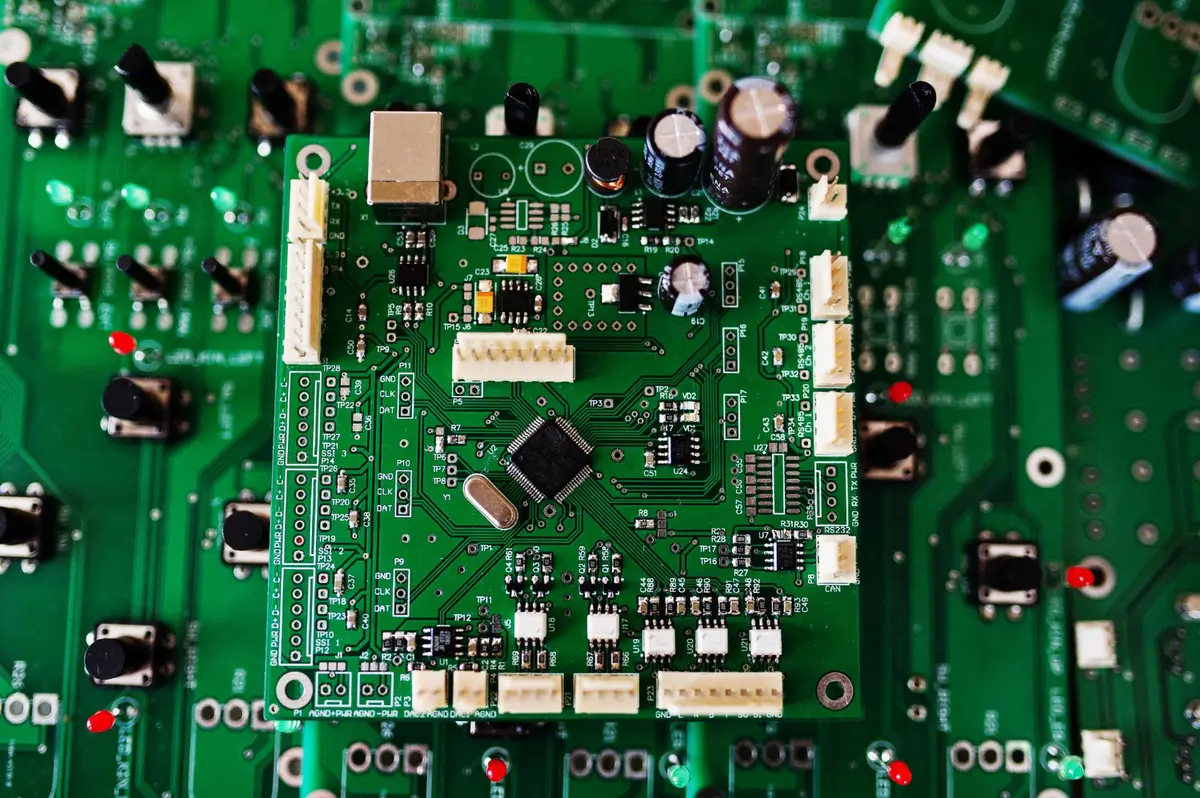
In the electronics industry, for example, the production of circuit boards requires the analysis of three types of technical files for every new product revision:
- Gerber files: graphic representations of the circuit board layers, used to guide the manufacturing process;
- BOM (Bill of Materials): the complete list of electronic components used on the board;
- Feeder List: the file that programs SMT machines to place each component in the correct position.
With each revision, parts of these files may be altered. It is up to the engineering team to compare versions, identify what has been added, removed, or changed, validate the modifications, and generate the documents that enable production.
It is technical, repetitive work that is highly dependent on the experience of each specialist.
Why manual processes are an industrial risk
Manual processes in highly complex technical environments carry risks that go beyond the time consumed.
Human errors in critical analyses are difficult to detect and can go unnoticed until they cause production failures, impacting cost, deadlines, and quality.
Reliance on individual knowledge represents a serious operational risk. When the entire process depends on the experience of one or two people, any absence can bring the operation to a standstill.
Compromised cycle time directly affects competitiveness. In markets where agility is a differentiator, taking hours—or days—to release a product revision is a problem that compounds.
In practice, what appears to be just an operational inefficiency is, in reality, a strategic bottleneck.
How AI solves this problem: intelligent agents in action
Artificial Intelligence applied to industrial processes does not function as simple task automation. The most advanced models operate through AI agents — systems capable of interpreting data, correlating information, and generating intelligent outputs with minimal human intervention.
What are AI agents?
AI agents are software modules that combine language models or computer vision with specific business logic to execute complex tasks autonomously. In other words, instead of simply following a fixed script, they analyze context, make micro-decisions, and produce structured results.
How does this technology apply to electronic engineering?
A platform with integrated AI agents can automate the entire technical analysis workflow for electronic boards, covering four critical functions:
- Gerber file comparison: the system analyzes differences between board versions, displays the similarity percentage, and visually highlights the altered points.
- BOM validation: automatically identifies what has been added, removed, or modified in the bill of materials between revisions, with full traceability.
- Feeder List generation: produces the file that programs SMT machines, replacing a process that previously required extensive manual work.
- Intelligent reporting: a second agent consolidates all changes and generates an explanatory report with recommendations for the engineering team—in both Portuguese and English.
The result is a continuous, traceable, and consistent workflow, from file upload to the final report.
Real results: numbers that speak for themselves
This was exactly the scenario Venturus encountered when starting the project with TPV, one of the world's largest manufacturers of monitors and televisions.
With every product revision, the TPV engineering team had to manually analyze Gerber files, compare BOM versions, and generate the Feeder Lists used to program SMT machines. It was a technical, critical process entirely dependent on the expertise of specialists—which, in total, consumed more than 18 hours per cycle.
To resolve this bottleneck, Venturus developed a platform with two integrated AI agents capable of automating the entire workflow: from file upload to the delivery of the final report with recommendations for the engineering team, in both Portuguese and English.
The impact was immediate and measurable:

Beyond speed, the gains extend to equally important dimensions:
- Full traceability: every step of the process is recorded and auditable.
- Reduction in errors and rework: automated analysis eliminates inconsistencies caused by fatigue or lack of attention.
- Less reliance on specialists: knowledge that was previously concentrated in a few professionals is now embedded in the system.
Check out the full TPV case study developed by Venturus.
What this case reveals about the future of smart manufacturing
The example above is not an isolated case—it is a snapshot of what is happening in the industry as a whole.
Companies operating in highly complex technical environments are realizing that AI is not just for automating simple, repetitive tasks. It can act on processes that require data correlation, pattern interpretation, and the generation of structured documents.
And adoption doesn't have to be radical. The most common and effective path begins by identifying the most costly bottlenecks and building specific solutions for them. Not a generic digital transformation, but surgical interventions that generate measurable results in the short term.
In this context, AI does not replace the engineer. It frees the engineer to do what the machine cannot: think, decide, and innovate.
Conclusion
From 18 hours to just over 2 minutes. That is the concrete measure of what Artificial Intelligence can do when applied to the right problem, in the right way.
Digital transformation in the industry begins when companies stop living with bottlenecks that seem inevitable and start asking: does it have to work this way?
Most of the time, the answer is no. And AI is, today, one of the most powerful tools to prove it.
Talk to our experts and find out how we can help your operation!